
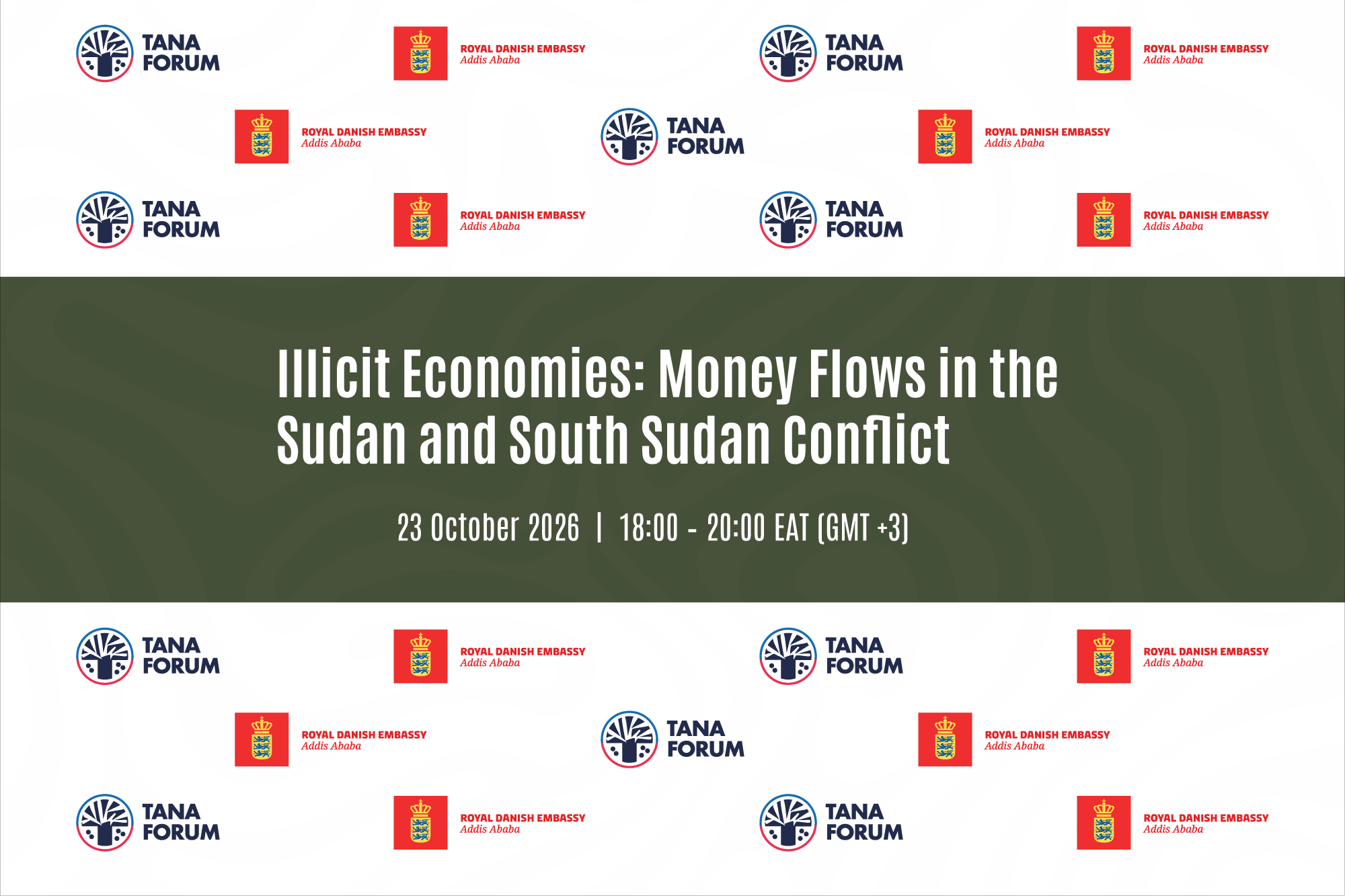
Bahir Dar, Ethiopia — On Saturday, 23 October 2026, policymakers, experts, mediators and partners will congregate at a Tana Forum side event titled Illicit Economies: Money Flows in the Sudan and South Sudan Conflict. They will examine how illicit money flows sustain violence and shape incentives for conflict actors in Sudan and South Sudan.
The event will explore how violence becomes commodified through both direct and indirect economic channels. In Sudan, gold has remained central to the conflict economy, with research by Chatham House highlighting how competition over gold production and trade sustains and shapes the war. Beyond the battlefield, cross-border networks involving armed groups, traders, smugglers and external actors continue to connect Sudan’s conflict to wider illicit regional and global money movements.
In South Sudan, illicit economies linked to oil, cattle raiding, taxation, trade and charcoal continue to reinforce militarised patronage systems. The side event will consider how these money flows affect political choices, armed mobilisation and the prospects for lasting peace, while also recognising the data gaps that make the scale of illicit trade difficult to quantify.
The discussion will be guided by a central question: how can peace processes make peace more economically viable than continued violence? Participants will examine the costs and returns of violence, the resources conflict actors gain or surrender, and the policy and mediation tools available to disrupt illicit economies without deepening civilian vulnerability.
By moving beyond traditional appeals to normative ideals, the event will focus on the economic rationality that underpins protracted conflict. It will seek to identify practical entry points for mediation, regional cooperation and policy action, including ways African countries can help curb illicit flows and support economic sovereignty in peace processes.
We expect to have a shared understanding of how illicit money flows shape conflict incentives in Sudan and South Sudan, practical recommendations for disrupting conflict economies, and strategic lessons that can inform peace efforts in and beyond the region.