
Current Board Members
The Board’s role is to provide strategic oversight for the Tana Forum as an institution and to determine its broad agenda and participation. The Board aims to ensure holistic and politically sound leadership by leveraging its members’ diverse, practical experiences in conflict resolution, diplomacy, governance, and the gendered dimensions of peace and security. In addition, these eminent African personalities utilize their expansive regional and global networks to steer the Forum’s strategic direction while keeping it grounded in grassroots realities. The current members of the Board are:

H.E. John Dramani Mahama
President of the Republic of Ghana and Chairperson of the Tana Forum Board
H.E. John Dramani Mahama Bio.
H.E. John Dramani Mahama is the President of the Republic of Ghana and Chairperson of the Tana Forum Board. Mahama first entered into politics in 1996 when he joined the National Democratic Congress and was elected to Parliament. From there, he climbed the political ranks, starting with his appointment as Deputy Minister in Communications in 1997, followed by Minister of Communications in 1998. He was appointed as Minority Parliamentary spokesperson for Communications in 2001 and for Foreign Affairs in 2005. He was also a member of the Pan-African Parliament and Chairman of the West Africa Caucus based in South Africa from 2004 to 2011. On 7 January 2009, John Dramani Mahama became the Vice-President of Ghana, remaining in the post until President John Atta Mills’ untimely death on 24 July 2012, when, in line with Ghana’s Constitution, he became President of the Republic. Outside of national politics, in 2014 he was elected Chairperson of the African Union’s High-Level African Trade Committee (HATC) and also head of the Economic Community for West African States (ECOWAS). In 2016, during the World Economic Forum, Mahama was appointed co-chair of the Sustainable Development Goals (SDGs) Advocates Group assisting the UN Secretary-General in the campaign to achieve the SDGs by 2030, and in 2017, Mahama presided over the ECOWAS Election Observation Mission to Liberia as head of mission.
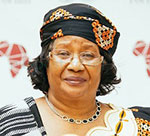
H.E. Dr. Joyce Banda
Former President, Republic of Malawi
H.E. Dr. Joyce Banda Bio.
H.E. Dr. Joyce Banda is President of the Joyce Banda Foundation and the former President of Malawi from 2012 to 2014. Dr. Banda was Malawi’s first female president and Africa’s second. An entrepreneur, activist, politician and philanthropist, Dr. Banda is a champion for the rights of women, children, the disabled, and other marginalised groups. She is a recipient of more than 15 international accolades including the 1997 “Hunger Project Africa Prize for Leadership for the Sustainable End of Hunger” shared with President Joaquim Chissano of Mozambique.
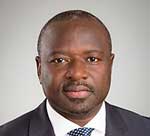
H.E. Dr. Lassina Zerbo
Former Prime Minister, Burkina Faso
H.E. Dr. Lassina Zerbo Bio.
Lassina Zerbo, a Burkinabé statesman and scholar, held the position of Burkina Faso’s Prime Minister from 2021 to 2022. Before assuming this role, he served as the Executive Secretary of the Comprehensive Nuclear-Test-Ban Treaty Organization.

H.E. Catherine Samba-Panza,
Former President, Central Africa Republic
H.E. Catherine Samba-Panza Bio.
Catherine Samba-Panza was interim President of the Central African Republic from 2014 to 2016. She was the first woman to hold the post of head of state, and the eighth woman in Africa to do so. Prior to becoming head of state, she was Mayor of Bangui from 2013 to 2014.
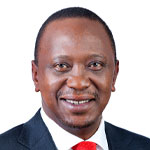
H.E. Uhuru Kenyatta
Former President, Republic of Kenya
H.E. Uhuru Kenyatta Bio.
His Excellency Uhuru Kenyatta is the Facilitator of the East African Community (EAC) – Led Nairobi Peace Process on the restoration of peace and stability in the eastern Democratic Republic of Congo (DRC).
H.E. Uhuru Kenyatta was elected the 4th President of the Republic of Kenya under the Jubilee Party on 9th April, 2013, was re-elected for a second and final term in August 2017, served up to 13th September, 2022 and handed over to the 5th President of the Republic of Kenya, after a peaceful election, and then he retired.
During his Presidency, President Kenyatta served as:
- Chair of the African Union Peace and Security Council;
- Chair of the Summit of East Africa Community Heads of State;
- Chair of the African Leaders Malaria Alliance (ALMA);
- President-in-Office of the Organization of the African, Caribbean and Pacific States (OACPS);
- Member of the High-Level Panel for Sustainable Ocean Economy;
- Global Leader for the Young People’s Agenda;
- Led Kenya as a non- permanent member of the United Nations Security Council; and
- In his political life served in the Presidency of the 2nd and 3rd Presidents of the Republic of Kenya as Deputy Prime Minister and Minister of Finance, Leader of the Opposition Party, nominated Member of Parliament and Minister for Local Government.
Uhuru Kenyatta graduated with BA Economics & Political Science degree at Amherst College, Massachusetts, USA, and has worked as:
- Chief Executive in varying private sector companies with interest in Brick & Tile Manufacturers; Tourism & Hotel management; Agricultural & Horticultural Farming; Pharmaceutical Production & Distribution; Construction, Property Management; Milk & Dairy Products Processing & Distribution;
- Chairman, Kenya Tourist Board;
- Chairman of Disaster Emergency Response Committee;
- He is married and has children and grandchildren; and
- He is a firm believer of the power of Unity and is inspired by: We Can Go Far Alone, But, We Can Go Even Further, When We Walk Together.
Currently and in addition to the above, H.E. Uhuru Kenyatta is the Patron of the Kenyatta Trust and Chief Executive of various private investment companies and businesses.
New Board Member
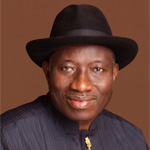
H.E. Dr. Goodluck Ebele Jonathan
Former President, Federal Republic of Nigeria
H.E. Dr. Goodluck Ebele Jonathan Bio.
His Excellency Dr. Goodluck Ebele Jonathan, President, Federal Republic of Nigeria, 2010-2015, was born in Otuoke, Bayelsa State on November 20, 1957.
He holds Bachelor’s, Master’s and Doctorate degrees in Zoology, Hydrobiology and Fisheries Biology respectively; all obtained from the University of Port Harcourt, Rivers State, Nigeria.
Before joining politics, Dr Jonathan served as a Science Inspector of Education, a lecturer, and later as an Assistant Director of the Directorate of Environmental Protection and Pollution Control in the defunct Oil Mineral Producing Areas Development Commission (now Niger Delta Development Commission- NDDC).
President Jonathan’s active political career began in 1998 when he was first elected Deputy Governor of Bayelsa State. He served in that capacity from 1999-2005, where his innate traits of humility, service, and loyalty received public notice. Afterwards, he became the acting, and later, the substantive Governor of Bayelsa State from 2005-2007.
Dr. Goodluck Jonathan was elected Vice President of the Federal Republic of Nigeria in 2007, a position he held until January 2010, when he became Acting President and following the death of President Umaru Musa Yar’Adua in May 2010, he was sworn in as President of the Federal Republic of Nigeria. In 2011, he contested and was elected as Nigeria’s President.
In total commitment to his avowed position that “His ambition is not worth the blood of any Nigerian”, Dr. Jonathan conducted his re- election campaigns peacefully, without any bloodshed.
When he received reports that the election results might not go in his favor, though votes were still being counted, in keeping with this mantra, he called his challenger, and congratulated him. This act, a novel in Africa, averted the bloodshed that would have happened to many nationals. He peacefully handed over to another administration in May 2015.
His successful Transformational Agenda led the implementation of projects and policies targeted at promoting development across different areas of the economy. Under his watch, Nigeria experienced unprecedented economic growth and became the largest economy in Africa. As President, he promoted democratic values and principles, peace and national security.
As President of the Federal Republic of Nigeria, Dr. Jonathan made major contributions to the political, economic and social development of Nigeria through his Transformation Agenda. He vigorously pursued his commitment to change the global negative perceptions of the Nigerian elections by reforming the electoral process to establish a culture of non-violent, free, fair, and credible elections. He further promoted democratization through the observance of the rule of law, enactment of the Freedom of Information Act, electoral reforms and non-interference in electoral outcomes.
He successfully pursued his economic recovery programme known as the “Transformation Agenda” through which he expanded the economy and increased agricultural and industrial production as well as supported and elevated the creative industry sector.
He promoted social advancement through gender inclusion and equity, and expanded access to education through the establishment and expansion of specialized and tertiary institutions. He grew the economy to be the largest in Africa with a GDP of over half a trillion dollars.
As President, he worked remarkably well as Chair of the Authority of ECOWAS Heads of State and Government with his colleagues particularly Heads of States in the ECOWAS to resolve the political crisis and stabilize democracies in the sub-region and Africa especially in countries like Cote d’Ivoire, Niger, Guinea Bissau, Mali, Liberia, Sierra Leone, Benin Republic, Burkina Faso and Togo. Owing to his commitment and passion towards bringing peace and stability to Africa, Nigeria was nominated twice within his five-year tenure, to the United Nations Security Council. A feat very rarely achieved by non- permanent members of the UN Security Council.
Dr. Jonathan was also given the highest national honour by several African Presidents of their countries equivalent to the GCFR in Nigeria for his commitment to stabilizing democracy in the ECOWAS. These countries include: Benin Republic, Cote D’ivoire, Equatorial Guinea, Republic of Liberia, Mali, and Sierra Leone.
Since leaving office in 2015, Dr. Goodluck Jonathan has remained totally committed to promoting democracy, credible elections, peace building, and respect for the rule of law in Africa. He is the Chairman of the Goodluck Jonathan Foundation, an organization he founded to promote best practices in democracy, peace building, and prosperity in Africa.
He is also the Convener of the West African Elders Forum, a peace- building and mediation platform comprising former President and imminent leaders from West African to address election related violence and other socio-political crises in the sub-region. So far, the Forum, under Jonathan’s leadership, had conducted successful mediation missions to The Gambia, Nigeria, Sierra Leone, Liberia and Senegal where elections were held in the last two years.
He has led different International Election Observation Missions to various nations including Tanzania, Zambia, Liberia, Sierra Leone, South Africa, Mozambique, The Gambia, Kenya, Sierra Leone, Cambodia, Zimbabwe, Pakistan, Senegal , Ghana and Cote d’Ivoire.
In 2019, he emerged Chairperson of the African Chapter of the International Summit Council for Peace (ISCP), an association of serving and former Presidents and their deputies, who are jointly working to bring peace, stability and economic prosperity to the world.
In May 2020, he was appointed as a Member of the Kofi Annan Foundation Electoral Integrity Initiative Senior Panel. Given his position as the former President of the Federal Republic of Nigeria and the great roles and contributions his administration offered to the maintenance of peace, security and stability in ECOWAS region. In July 2020, he was appointed as the ECOWAS Special Envoy to Mali with the mandate of restoring peace and democracy in the country. In May 2021, ECOWAS again appointed Jonathan as Chairman ECOWAS Council of the Wise, an organ within ECOWAS with a mandate to bring peace and stability among member states.
In 2021, he was invited by the Government and people of The Gambia to help the country galvanize a consensus on the draft of a proposed new constitution, especially after the process got stalled in The Gambian parliament.
Similarly, in the same year, he was invited by the President of the Republic of South Sudan to help the country provide a direction for the implementation of a peace process signed by all the factions to bring stability to the young central African nation.
Former President Goodluck Jonathan also made history by becoming the first sub-Saharan African leader to be appointed to the International Advisory Board of the European Corporate Council on Africa and the Middle East, also known as the ECAM Council.
In July 2022, President Jonathan led his Foundation to Gambia, at the invitation of the leadership of The Gambian Parliament to conduct a two-day capacity building workshop for the benefit of the lawmakers, especially first-time parliamentarians.
In and out of office, Dr Jonathan has received several local and international awards, in recognition of his exceptional public service and commitment to peace, democracy and good governance on the continent. The last one he received was in April 2025 when he won the presitgious Sunhak Peace Award in South Korea.
Dr. Jonathan is a Life Patron and Fellow of the Nigerian Environmental Society (NES), Fellow of the Fisheries Society of Nigeria, (FISON), Fellow of the Public Administrators of Nigeria, Fellow, International Association of Impact Assessment, IAIA, Fellow, Institute of Corporate Affairs Management as well as Paul Harris Fellow, Rotary International.
New Board Member
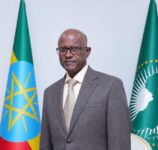
H.E. Amb. Hadera Abera Admassu
State Minister for Political and Economic Diplomacy at the MOFA Ethiopia
H.E. Amb. Hadera Abera Admassu Bio.
H.E. Amb. Hadera Abera Admassu currently serves as State Minister for Political and Economic Diplomacy at the Ministry of Foreign Affairs of the Federal Democratic Republic of Ethiopia.
He previously served as Ambassador Extraordinary and Plenipotentiary of Ethiopia to Australia from May 2021 to February 2023 and as Ambassador Extraordinary and Plenipotentiary to the Republic of Ghana from June 2023 to March 2025.
Prior to joining the diplomatic service, H.E. Amb. Hadera had a distinguished career spanning more than three and a half decades at the National Intelligence and Security Service, where he held several senior leadership positions, including Deputy Director General of NISS, Director of External Intelligence, Director of Intelligence Training Collage and Director of Immigration.
He holds a Master of Science (MSc) in Information Science and a Bachelor of Arts (BA) in Business Management, both from Addis Ababa University.

H.E. Dr. Tekeda Alemu
Former State Minister of Ethiopia and Permanent Representative of the UN Security Council
H.E. Dr. Tekeda Alemu
Ambassador Tekeda Alemu has close to forty years of experience as a career diplomat. He was appointed Ethiopia’s Permanent Representative to the UN in New York in January 2011 where he served as President of the Security Council in 2017. Prior to New York he had served twenty years in the capacity of, first, as Deputy Foreign Minister and then as State Minister.
Ambassador Alemu earned a B.A and M.A from UCLA and a Ph.D from Claremount Graduate School. He also taught at Addis Ababa University in the early 90’s with the rank of Assistant Professor.
H.E. Michelle Ndiaye,
African Union Special Representative of the Chairperson and Head of the AU Liaison Office in DRC
H.E. Michelle Ndiaye Bio.
H.E. Mrs. Michelle Ndiaye is the Special Representative of the Chairperson and Head of the AU Liaison Office in Democratic Republic of Congo. She served as the Director of the Africa Peace and Security Programme in collaboration with the AU Commission at the Institute for Peace and Security Studies (IPSS) and the former Head of the Tana Forum Secretariat from 2012 – 2020. She has a wealth of experience in the field of democratic and local governance, post-conflicts and community recovery, sustainable development and environmental issues, transitional justice, communication and research.
New Board Member
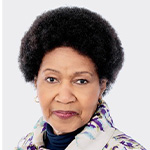
H.E. Dr. Phumzile Mlambo-Ngcuka
Former United Nations Under- Secretary-General and Executive Director of UN Women
H.E. Dr. Phumzile Mlambo-Ngcuka Bio.
H.E. Dr. Phumzile Mlambo-Ngcuka is the former United Nations Under- Secretary-General and Executive Director of UN Women, who completed her term in August 2021 after being sworn into office on 19 August 2013. She was awarded her bachelor’s degree in the Arts and Education at the National University of Lesotho (awarded in 1980). She further obtained a qualification in Gender Policy and Planning from the University College London (in 1988), a master’s degree in Philosophy from the University of Cape Town (awarded in 2003), and a doctorate in Technology and Education from Warwick University (awarded in 2013).
As student and in her professional life she was a campaigner against Apartheid and against Gender Discrimination. She was a lecturer at a Teachers Training College (1980 – 1981) and a became teacher at the Ohlange High School (1981 – 1983). She then moved to Geneva as the global coordinator of young women’s mobilization at World YWCA, where she worked with young women around the world and established a global programme. She returned to Cape Town where to spearheaded TEAM, an ecumenical organization that focused on building leaders especially women. From there she transitioned to campaign for South Africa’s democratic government as a member of the African National Congress.
Her formal political journey began as a member of the first democratic South African Parliament then as Deputy Minister in the Department of Trade and Industry (1996 – 1999), as Minister of Minerals and Energy (1999 – 2005), and finally as Deputy President of South, she became the first woman to hold the position of
Deputy President, the highest-ranking female political leader in the history of South Africa. She focused on collaboration between government, business and civil society, focused on ending poverty and expanding access to opportunities for young people and women.
As the head of the United Nations Women she worked to change laws that discriminates against women and girls. She established work on transforming social inequalities that discriminate against women. Mobilised new allies inclusive of men through initiatives such as the HeforShe movement (for men and boys to contribute in the fight against gender ineequality), the UnStereotype Alliance initiative for influencing advertising norms for positive change and equal representation and helped countries to change hundreds of laws that discriminate against women and girls.
She has also successfully mobilised a historic 40 billion USD in financial commitments from Member States, private sector, philanthropies and civil society as well as young people, which have formed Generational Equality to mark Beijing 25 around the world.
She was inducted as a Hauser Leader at the Harvard Kennedy School’s Center for Public Leadership and awarded the Vanguardaward by Howard University for Leadership and Activism in promoting human rights, equality and justice for women and girls.
She has authored several scholarly and other opinion pieces,including in the Harvard International Review. She was awarded Honorary Doctorates from the following institutions: (2003) the University of the Western Cape (2007), Nelson Mandela University (2014), the University of Fort Hare (2016) University of Witwatersrand (2019) Rhodes University (2022) and University of Edinburgh.
Dr. Mlambo-Ngcuka continues to be engaged and affiliated with organisations committed to education, women empowerment and gender equality. She has affiliations with Umlambo Foundation which she (Founded) which works for improvement of education, access to edu tech and non discrimination.
She Is in the board of the global organisation Women Deliver, Global Citizen, Chancellor of the University of Johannesburg and Chairperson of International Olympics Committee human rights. A member of the Panel of the Wise at the African Union. A board member of two listed companies Mercedes-Benz SA and a Canadian Mining Company Ivanhoe as well as a Renewable Energy start up Smart Grid.
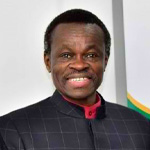
Prof. Patrick Loch Otieno Lumumba
Former Director and Chief Executive Officer, Kenya School of Laws, Kenya
Prof. Patrick Loch Otieno Lumumba Bio.
Prof. PLO Lumumba is the Founder of the PLO Lumumba Foundation and a consultant with Lumumba and Lumumba Advocates, a member of the Africa Justice Group (AJG). He is an Associate Professor of Public Law, a holder of an LL.D (Doctor of Laws) on the Law of the Sea from the University of Ghent, Belgium, Master of Laws degree and Bachelor of Laws degree from the University of Nairobi. He is an Advocate of the High Courts of Kenya and Tanganyika and a Certified Mediator. He is also a Fellow of the Institute of Certified Public Secretaries of Kenya FCPS (K) and a Fellow of the Kenya Institute of Management (MKIM). He was the Founding Dean, Kabarak University School of Law, a former lecturer at the University of Nairobi (UON), the United States International University (USIU Africa) and Widener University USA (Nairobi Summer School). He is the immediate former Director and Chief Executive Officer of the Kenya School of Law, a former Secretary of the Constitution of Kenya Review Commission and a former Director of the defunct Kenya Anti-Corruption Commission (KACC), (Now Ethics and Anti-Corruption Commission (EACC)). He is the Founding Trustee of the African Institute for Leaders and Leadership (AILL) and founding Chairman of the Association of the Citizens Against Corruption (ACAC). Prof PLO Lumumba holds an honorary Degree of Doctor of Letters (Honoris Causa) from the University of Cape Coast in Ghana. He is a renowned legal practitioner and author of several books and articles.